Beat Jumper: EDM up
- 4.4
- Rating
- 10.00M
- Installs
- Free
- Price

 Analysis by App-foxy
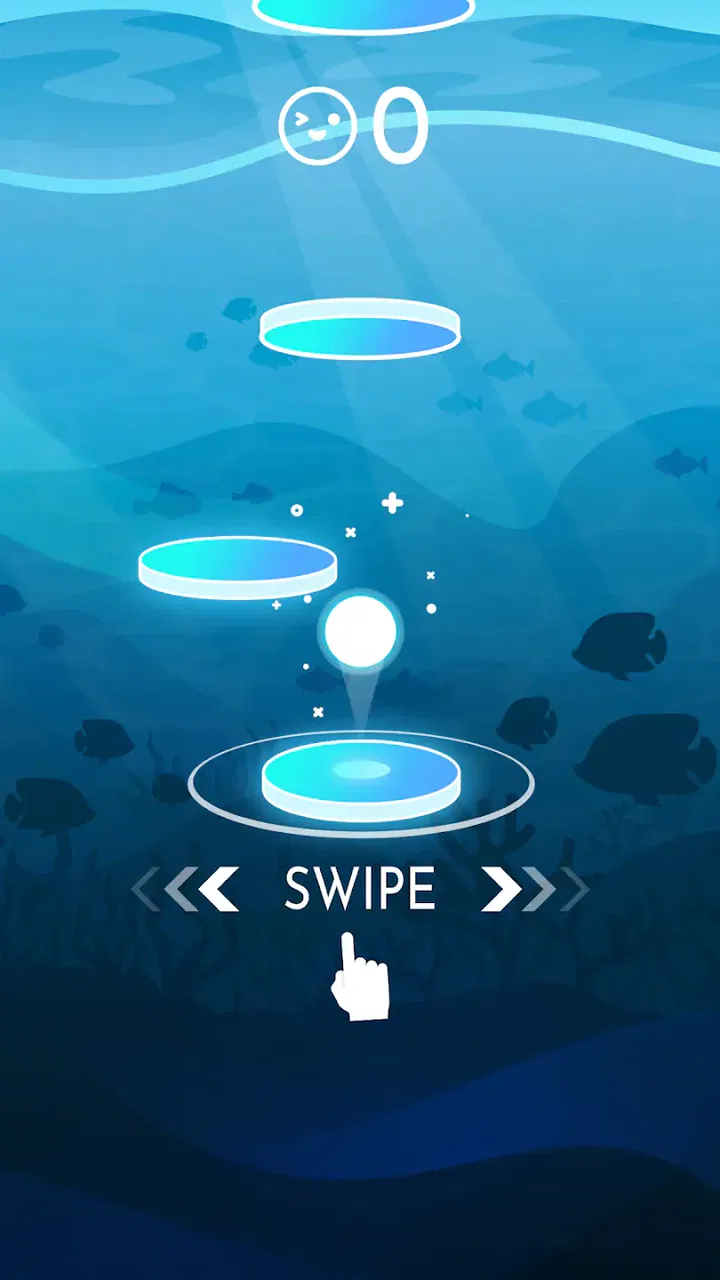
Beat Jumper: EDM up is the kind of music game I open when I want something immediate rather than a long session of planning, reading, or learning complicated controls. I tap and guide a bouncing ball through a sequence of platforms while the electronic soundtrack sets the pace. It looks simple at first, but the combination of timing, movement, and visual rhythm makes a good run surprisingly absorbing. After spending time with it, I see the appeal: this is a lightweight arcade experience built around music, quick reactions, and the satisfaction of improving one attempt at a time.
The game comes from AMANOTES PTE. LTD. and sits in the music category, although it plays more like a rhythm-focused arcade game than a traditional music-training app. It is free to start, aimed at Everyone, and supports Android devices running at least version 6.0. Its current version is 2.9.2, and the game has grown into a widely recognized mobile title, with over ten million installs. That scale matters because it suggests the basic idea is easy for many people to understand, even if the later challenge will not suit every player.
How Beat Jumper feels in everyday play
The central interaction is wonderfully direct. I do not need to memorize a long tutorial or manage an inventory before playing. The ball moves through the level, and I focus on steering it toward the next safe platform. The music gives the action a natural pulse, while the bright presentation makes each jump easy to follow during a short session. The best moments arrive when my movements line up with the beat and the level seems to carry me forward.
You May Also Like

 AccuWeather: Weather Radar
AccuWeather Review: A Quick, Clear Forecast for Everyday Decisions
For everyday plans, the best forecast is the one you can understand quickly. AccuWeather makes rain timing, radar, and local conditions easy to act on, with a few trade-offs.

 Hill Climb Racing
Why Hill Climb Racing Still Turns Crashes Into One More Run
A tiny car, a bumpy hill and one more upgrade: Hill Climb Racing keeps resurfacing because its simple chaos makes every near-miss feel personal.

 AliExpress - Shopping App
AliExpress Makes Global Shopping Feel Personal, but Shoppers Bear the Risk
AliExpress turns a global marketplace into a pocket-sized discovery engine. Its reach is useful, its shopping loop compelling, and its trade-offs easy to miss.

 Lords Mobile: Kingdom Wars
Lords Mobile Is a Kingdom-Building Routine, Not a Quick Match
A case-by-case verdict on the building, battles, device demands, and social commitments that make Lords Mobile rewarding for some players and exhausting for others.

 PDF Scanner app - TapScanner
TapScanner Makes Paperwork Easier to Capture, Check, and Share
TapScanner makes scanning with a phone feel less like a rescue operation and more like a dependable step in getting work done. Its capture tools are useful, though not flawless.

 Block Blast!
 Shows How Much a Puzzle Game Can Leave Out
A quiet grid game shows why puzzle players increasingly value instant clarity, repeatable skill and low-pressure play—and where the genre still needs to catch up.
More From Our News Desk
View All News


That simplicity makes the game especially convenient in ordinary situations. I can play it while waiting for a coffee, taking a short break from work, or sitting on public transport without committing to a large story or a match that demands a fixed amount of time. A typical session might begin as a quick distraction and turn into several attempts because I was close to reaching a difficult section. This “one more try” quality is one of its strongest practical advantages.
The controls are also a good match for a phone. Touch input feels more natural here than a virtual button layout would. I am not juggling several commands; I am making quick directional decisions and trying to anticipate where the ball will land. That keeps the focus on rhythm and reaction rather than on learning an awkward control scheme. Still, the same minimalism can become a weakness when a level requires extremely precise movement, since a small touch mistake can spoil an otherwise strong run.
The real appeal is the connection between sound and movement, not the complexity of the rules. If you enjoy electronic music and arcade games that reward repeated practice, the design makes sense quickly. If you are looking for a deep music game in which you create tracks, study note patterns, or build a personal library of songs, this is a different experience. It uses music to shape the mood and timing of play, but it does not replace a dedicated rhythm-training or music-production app.
The soundtrack changes the way the levels feel
Electronic music gives the game energy that a silent platform challenge would not have. A successful sequence feels more satisfying when the jumps appear to follow the track, and a mistake is more noticeable because it interrupts that flow. I found that I played more confidently when I stopped treating every movement as an isolated tap and instead listened for the broader rhythm of the section.
That approach leads to a useful tip: do not watch only the ball. I get better results when I look slightly ahead at the next platforms and use the music as a timing guide. The visual effects can be lively, especially during repeated attempts, so keeping my attention on the upcoming landing area helps reduce rushed reactions. This is a small adjustment, but it makes the game feel less random and more learnable.
Another practical point is that the game is more enjoyable with sound enabled, but it remains usable when I need to play quietly. Without audio, I lose part of the intended rhythm feedback and the experience becomes more dependent on visual timing. For a short silent session, that is fine. For serious attempts at difficult passages, headphones or a quiet environment make it easier to stay connected to the beat without turning the volume up excessively.
What the current version means for players
The current version, 2.9.2, is the version I would judge when deciding whether to install the game today. It represents a product that has continued beyond its original launch rather than a brand-new experiment. The game was released on October 30, 2018, so existing players have had considerable time to become familiar with its core style. That history is useful context: the concept is established, but anyone expecting a completely different game after years of availability may find the familiar arcade structure more important than any individual update.
I would not treat the version number as a promise of a particular feature or a guarantee that every device will feel identical. Performance can depend on the phone, the screen response, and how comfortably the player can make quick touches. On a modern device, the game’s simple control idea should be easy to understand, while older supported hardware may make visual smoothness and touch accuracy more important considerations. The minimum operating-system requirement is Android 6.0, which keeps the potential audience broad, but compatibility alone does not guarantee the best playing experience on every handset.
The game’s public reception is strong overall, with an average rating of 4.4 from around sixty-one thousand ratings and roughly two thousand six hundred written reviews. I read that as evidence that the basic loop works for a large audience, not as proof that every player will enjoy the difficulty or monetization. Ratings are particularly useful here because the game’s premise is so focused: people generally know quickly whether bouncing through music-driven levels is their kind of entertainment.
For someone installing it now, the important question is not whether the game has a long feature list. It is whether the current version still delivers a responsive, repeatable music-arcade loop. In my experience, that remains the reason to play. The experience is strongest when I want quick action and weakest when I want a sense of long-term progression comparable to a larger action game or a full rhythm platform.
How newcomers and returning players should approach it
New players should resist the urge to make every movement as fast as possible. The early simplicity can encourage overconfidence, but the game rewards controlled timing more than frantic tapping. I usually watch the next landing point, make one deliberate adjustment, and then prepare for the following platform. This habit is more reliable than reacting only after the ball is already in the air.
Returning players may get more value by treating difficult sections as timing exercises rather than failures. If I miss the same kind of jump repeatedly, I ask whether I am moving too late, holding a direction too long, or letting the visual effects distract me. That turns repetition into a small troubleshooting process. The game does not need to become a serious training routine, but this mindset helps prevent frustration when a familiar track suddenly exposes a weak reaction habit.
A less obvious trade-off is the relationship between music enjoyment and performance. A song I like can make me want to keep playing, but it can also make me focus on the soundtrack instead of the platforms. Conversely, a less appealing track may be easier to play if I use its beat mechanically. I found that separating “Do I like this song?” from “Can I read this section?” helps me judge a level fairly. Enjoyment and success overlap, but they are not always the same thing.
Free access and the role of purchases
Beat Jumper is free to download and play, with in-app purchases ranging from $0.99 to $19.99 per item. That makes it easy to test the central loop without paying at the start. I appreciate that approach for a game built around a very specific taste: some people will immediately enjoy the music-and-jumping combination, while others will know after a few minutes that it is not for them.
The presence of purchases is still worth considering before spending time with the game. A free arcade title can feel less relaxing if the player becomes focused on what is available behind optional payments rather than on the timing challenge itself. My advice is to play first and decide later whether any purchase genuinely improves your sessions. Do not assume that spending will solve a control problem or make a difficult passage more satisfying; better timing and a calmer approach are usually more useful than buying something impulsively.
This is also where Beat Jumper differs from a paid, premium rhythm game. A premium alternative may offer a more controlled progression model or a cleaner relationship between payment and content, while this game is easier to try but may feel more commercially structured. On the other hand, a premium title can ask for money before you know whether its music and controls suit you. The better choice depends on whether you value risk-free experimentation or a more predictable paid experience.
Where it stands beside other music games
Compared with traditional rhythm games that ask me to hit notes in lanes, Beat Jumper gives me a stronger sense of physical movement through space. I am not simply matching symbols at the bottom of the screen; I am guiding a bouncing object and reading the next landing point. That makes it feel closer to an arcade platform challenge with a musical backbone.
Compared with endless runners, it places more emphasis on the track’s rhythm and the deliberate sequence of platforms. An endless runner can be ideal when I want constant forward motion and changing obstacles, but Beat Jumper’s appeal comes from learning its particular timing patterns. Compared with music-creation apps, it is far more accessible and playful, but it gives me no reason to expect the same control over composition, instruments, or production.
Those comparisons clarify who should choose it. I would recommend it to someone who wants a colorful, music-led game that can be understood immediately and improved through repetition. I would steer a competitive rhythm specialist toward a title with more detailed note charts and performance feedback. I would also suggest a different option to anyone who dislikes repeating a section after a missed jump, because the game’s satisfaction depends heavily on accepting that cycle.
Limitations that become clearer over time
The focused design is both the game’s strength and its main limitation. Once the novelty of bouncing through electronic tracks settles, the experience depends on whether the core loop continues to hold your attention. Players who need a story, character development, strategic choices, or a large collection of modes may find the structure narrow. I never felt that the game was pretending to be something larger, but its compact purpose means it cannot satisfy every kind of mobile player.
Touch precision is another potential source of friction. A small screen, an uncomfortable grip, or an overly enthusiastic swipe can affect a run. I get better results by holding the phone securely and keeping my touch movements short. Playing while walking, standing in a crowded vehicle, or using the phone one-handed can be noticeably less comfortable than playing in a stable position. That makes it a good waiting-room game, but not always a good game for a physically distracting commute.
The age rating of Everyone makes the game approachable for a broad audience, especially families looking for a simple music-themed distraction. Even so, younger players may need guidance around optional purchases, and adults may want to check their own spending habits before leaving payment decisions entirely to a child. The accessible presentation does not remove the need for sensible device and purchase boundaries.
Another limitation is that the music can dominate the experience. That is helpful when I want energy, but tiring when I want a quiet, low-stimulation game. If bright effects and electronic tracks are not appealing, the game’s central identity may work against it rather than merely becoming a minor detail. In that case, a calmer puzzle game or a slower music experience would probably be a better fit.
Who will enjoy it most
I think Beat Jumper works best for three kinds of players. The first is the casual player who wants a short session with an immediate objective. The second is the music fan who enjoys electronic soundtracks and likes the feeling of movement synchronized with a beat. The third is the improvement-minded player who can replay a section several times without seeing repetition as a chore.
It is also useful for introducing someone to mobile rhythm games because the controls are easier to explain than a dense note chart. I could hand the phone to a friend and describe the basic goal in a few seconds. That low entry barrier makes it suitable for sharing, although the difficulty may still separate a first-time player from someone who has already developed strong timing habits.
I would skip it if my priority were a deep campaign, a realistic musical instrument, or a game that rewards long strategic planning. I would also skip it if I strongly dislike free-to-play structures or if I want every song and challenge to be presented in a clearly premium package. The game is not failing in those areas; they simply fall outside what it is designed to provide.
What I would watch as the game continues
When I look at the game’s future, I would pay attention to whether new content keeps the central movement feeling fresh without making the controls less readable. More music is valuable only if the levels continue to offer distinct timing challenges rather than repeating the same pattern with a different track. I would also want updates to preserve responsiveness on older supported devices, since a game built around quick touches has little room for input uncertainty.
I would be cautious about expecting a major change in identity. The established appeal is the combination of electronic music, bouncing movement, and short arcade attempts. A future evolution that respects that foundation would make sense to me; a shift toward complicated systems could weaken the immediate accessibility that makes the game easy to recommend. In other words, the most important sign of progress would not necessarily be more menus or more mechanics, but smoother play and better reasons to return.
For existing users, the current version is best approached as a continuation of a familiar idea rather than a completely new starting point. If you already enjoy the rhythm and have developed reliable timing habits, you will likely appreciate refinements that protect that flow. If you stopped playing because the basic loop felt repetitive, a version change alone may not alter your opinion unless the available music and level variety address your specific reason for leaving.
My final recommendation
After reviewing Beat Jumper as a mobile music game, I see it as an easy recommendation for short, energetic sessions, with a clear warning that its narrow focus will not suit everyone. The free entry point lowers the risk, the Everyone rating makes it broadly approachable, and its 4.4 average from a substantial player audience shows that the concept has connected with many users. I would install it when I wanted a fast arcade challenge driven by electronic music, not when I wanted a complete rhythm-training system or a deep progression game.
My practical recommendation is to try it with sound on, play in a stable position, and judge it by how much you enjoy repeating a difficult section. If the first few attempts make you curious about improving your timing, the game can become a satisfying little habit. If the same simplicity feels limiting or the purchase structure bothers you, a premium rhythm title or a more traditional music app will probably serve you better. For the right player, though, Beat Jumper remains a focused and approachable way to turn a few spare minutes into a lively musical challenge.
FAQs for Beat Jumper: EDM up
01What is Beat Jumper: EDM up and how is it played?
Beat Jumper: EDM up is a rhythm-based arcade game where you guide a bouncing ball across platforms while following the timing of energetic electronic music. You usually control the ball with simple left-and-right movements, aiming to land safely on the next platforms and continue climbing. The game combines quick reactions, music synchronization, colorful visuals, and progressively challenging level layouts.
02Is Beat Jumper: EDM up free to download and play?
Beat Jumper: EDM up can generally be downloaded for free, allowing players to try its core gameplay without paying upfront. However, the experience may include advertisements, optional purchases, or other in-app items depending on the version and platform. Before downloading, it is worth checking the store listing for current pricing, available purchases, and whether certain songs, features, or bonuses require payment.
03Does Beat Jumper: EDM up require an internet connection?
The basic gameplay may work without a constant internet connection, which makes Beat Jumper: EDM up convenient for short sessions while traveling or when mobile data is unavailable. Nevertheless, an internet connection may be needed for advertisements, downloading additional content, synchronizing progress, updates, or accessing certain online features. Requirements can vary between Android and iOS versions, so check the latest store information.
04Is Beat Jumper: EDM up suitable for beginners and children?
The controls are easy to understand, making Beat Jumper: EDM up accessible to beginners after only a few attempts. The real challenge comes from timing movements accurately as the speed and platform patterns become more demanding. Parents should also review the age rating, advertising, music, and in-app purchase settings before allowing younger children to play, especially because fast-paced gameplay can become quite intense.
05What are the main advantages and disadvantages of Beat Jumper: EDM up?
The biggest strengths of Beat Jumper: EDM up are its straightforward controls, lively EDM soundtrack, bright visual presentation, and short levels that suit quick gaming sessions. It can also be satisfying for players who enjoy improving their timing and chasing higher scores. On the other hand, repeated attempts may feel difficult, advertisements can interrupt the experience, and optional purchases may be present depending on the release.
Pros
- Simple one-touch controls make it easy to start playing.
- Fast EDM tracks create an energetic
- motivating atmosphere.
- Short rounds work well for quick gaming sessions.
- Unlockable songs and skins add goals beyond basic score chasing.
- Offline play is useful when you have no internet connection.
Cons
- Gameplay can become repetitive after extended sessions.
- Some levels require very precise timing and quick reactions.
- Frequent advertisements may interrupt the experience.
- Progression can feel slow without optional purchases or rewards.
- The music selection may not appeal to players who dislike EDM.

Beat Jumper: EDM up
Gallery